Surface repairs
Replace isolated damaged boards and correct fastening problems when the supporting framing remains suitable.

Loose railings, soft boards, unstable stairs, movement, rot, and water damage rarely improve on their own. We trace the visible symptom to the affected components and define the repair around what is still dependable.
Clear scope • Practical material guidance • Local project planning
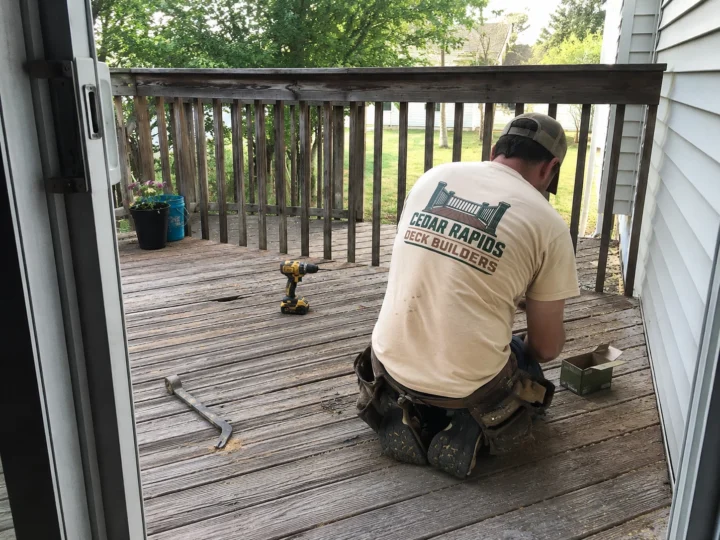
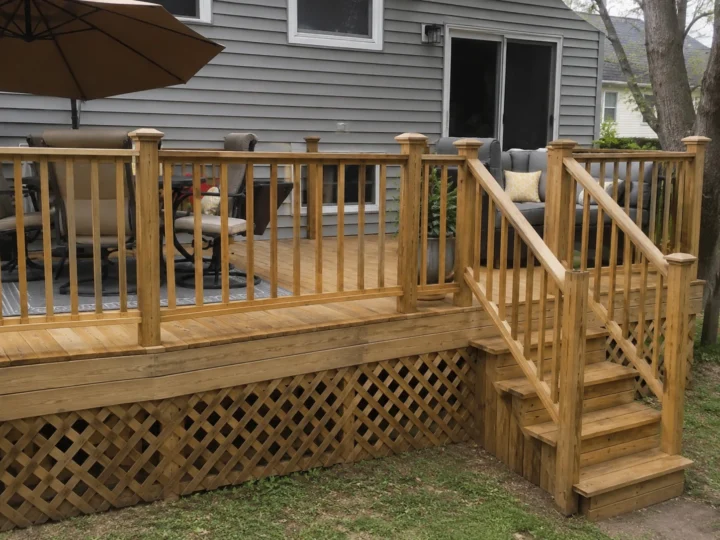
Real project details and clearly labeled planning concepts selected to support this service.
A damaged board may be isolated, or it may be evidence of trapped moisture, poor flashing, failed fasteners, or movement below. The right repair begins by understanding how the affected area is supported and why it failed.
When the surrounding structure remains useful, targeted work can extend the deck’s service life without forcing a larger project. When deterioration is widespread, we explain why resurfacing or replacement may be the safer investment.
Repair work can involve one component or several connected systems. The estimate should make that boundary clear.
Replace isolated damaged boards and correct fastening problems when the supporting framing remains suitable.
Address defined joist, beam, post, footing, blocking, or support concerns without automatically replacing the entire deck.
Review ledger attachment, flashing, fasteners, and signs of separation or water entry at the home.
Repair unsafe stairs, landings, railings, posts, and handrails when the problem is part of a broader deck repair.
A useful repair plan separates dependable construction from damaged or questionable components.
Follow loads and water from decking through framing, supports, stairs, railings, and the house connection.
Correct movement, decay, unsafe access, weak guards, and active water paths before cosmetic improvements.
Measure the useful deck retained, expected remaining life, and total problem solved against resurfacing or replacement.
Share the property location, the condition or goal, the way you want to use the deck, and any photos that help explain the project. We will use that information to focus the estimate conversation on hire a contractor to diagnose and correct defined problems on an existing deck that may still be worth keeping.
Start with the details you know. Measurements, materials, and final design decisions can be developed as the scope becomes clearer.
The written scope should define the project limits, site access, demolition if applicable, structural work, materials, surface repairs, structural components, house connection, access and guards, cleanup, and how hidden conditions or requested changes will be handled.
Use this path when visible damage or safety concerns need to be diagnosed. Surface-wide renewal fits Deck Resurfacing, while a complete tear-off fits Deck Replacement. You do not need to diagnose the project before contacting us; describe the condition, goal, and property location and we can route the request appropriately.
Wood and composite can both be considered when they fit the deck repair scope. The right direction depends on structure, exposure, appearance, maintenance, heat, traction, budget, and expected years of use.
Yes. Decking and trim can conceal rot, corrosion, failed flashing, poor connections, or previous alterations. A strong estimate explains what is visible, what remains concealed, and how additional work will be documented and approved.
Yes. Projects may be considered throughout Marion, Hiawatha, Robins, Fairfax, Palo, Center Point, Ely, Atkins, Mount Vernon, Lisbon, Toddville, Central City, Alburnett, Keystone, Van Horne, Springville, Anamosa, and nearby Eastern Iowa areas, depending on scope and schedule.
Start with the concern or goal: new deck, repair, replacement, resurfacing, stairs, railings, water damage, rot, structure, or outdoor living upgrades.