Deck Resurfacing in Cedar Rapids
Renew a worn deck by replacing most or all surface boards while keeping framing that is still structurally suitable. We evaluate what stays before pricing wood or composite decking over the retained frame.
- Remove worn deck boards across the surface
- Screen the existing frame before premium materials are installed
- Coordinate new decking with stairs, railings, borders, fascia, and edges
Surface-wide deck renewal • Existing-frame evaluation • Wood and composite options
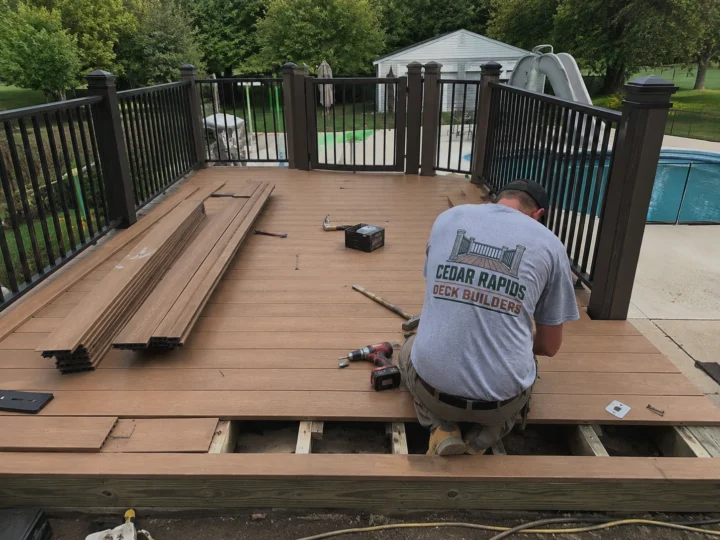
Resurfacing is a structural decision before it is a color decision
Removing old boards exposes the frame that must support the new investment. Joist condition, spacing, flatness, flashing, fasteners, ventilation, and remaining useful life all influence whether resurfacing makes sense.
A good project renews the visible deck without creating a mismatch between long-life surface material and framing that is already near the end of service.
- Most surface boards are worn or splintered
- The deck footprint and stair location still work
- The frame appears stable but needs proper evaluation
- A switch from wood to composite is being considered
- Railings or fascia may be upgraded with the surface
- Complete demolition may be unnecessary
Define what stays, what changes, and what may be uncovered
Resurfacing works best with an explicit retained-frame and hidden-condition plan.
Frame screening
Review visible joists, beams, posts, footings, ledger, flashing, movement, and drainage before pricing the new surface.
Board removal
Remove existing decking while protecting retained structure and watching for concealed deterioration or corrosion.
Surface installation
Install compatible wood or composite decking with required spacing, fastening, seams, borders, and stair details.
Finish coordination
Address fascia, railings, posts, lighting readiness, trim, gates, and transitions that meet the renewed surface.
Avoid putting premium decking on a short-life frame
The material upgrade should align with the support system’s condition and remaining value.
Verify suitability
Treat early observations as screening—not a promise about conditions hidden until decking is removed.
Match materials
Confirm joist spacing, fastening, ventilation, stair framing, and edge details for the selected board system.
Plan contingencies
Explain how documented hidden damage will be priced and approved before additional work proceeds.
Confirm the frame before choosing the new surface
The condition below the boards determines whether resurfacing is a smart investment. Surface material, frame work, stairs, railings, edges, and concealed conditions should be addressed in one scope.
- 01
Show the whole deck
Share surface wear, soft areas, current railings and stairs, the underside where visible, and any movement or water concerns.
- 02
Evaluate what can remain
Review framing condition, spacing, alignment, supports, house connection, ventilation, and the remaining life expected from retained components.
- 03
Select and coordinate finishes
Define wood or composite boards, fasteners, borders, fascia, stair and railing work, cleanup, and the process for concealed damage.
Could your deck qualify for resurfacing?
Send wide photos of the deck plus closeups of worn areas and any accessible framing. We will start with whether the frame is worth keeping.
See surface replacement with wood and composite decking
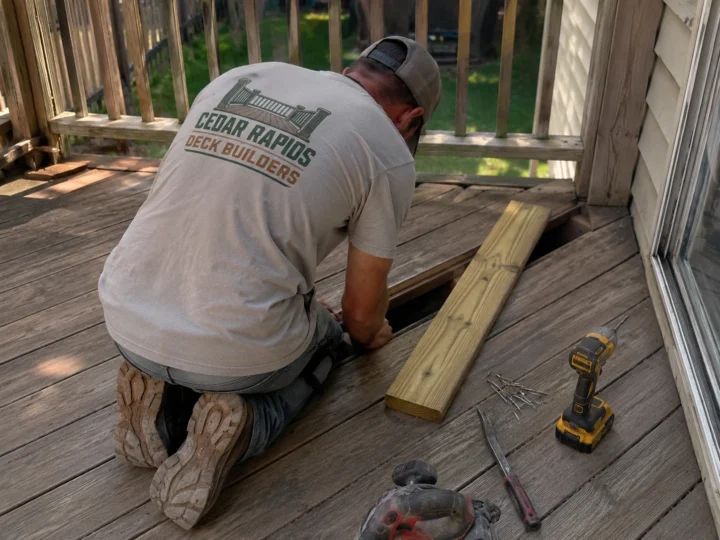
These jobsite photos show old boards being replaced and new surfaces installed while the retained structure remains part of the project decision.
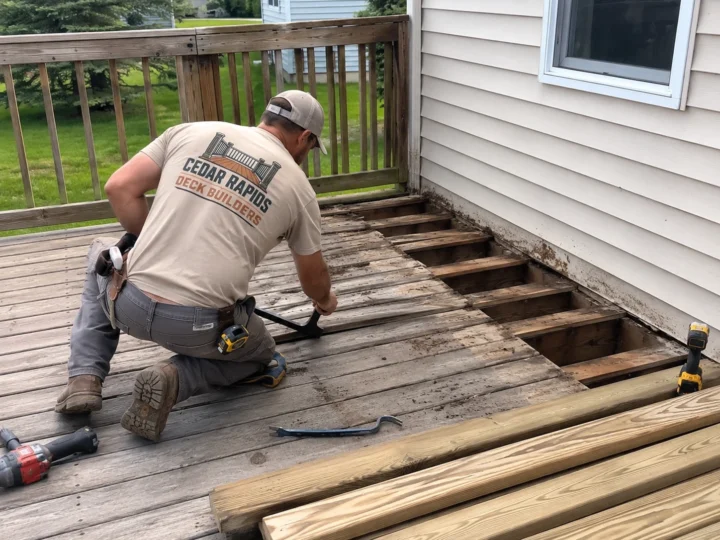
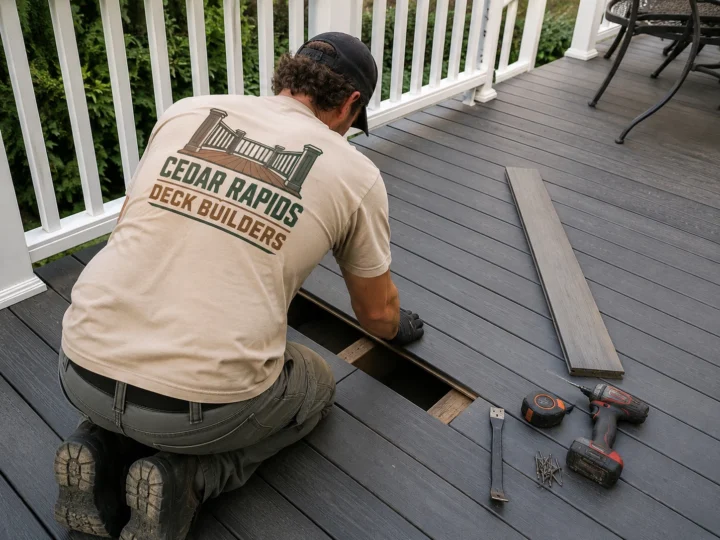
Resurfacing Older Decks in Eastern Iowa
Cedar Rapids weather can age decking faster than protected framing—or expose deeper problems through trapped moisture and repeated freeze-thaw cycles. The frame must be evaluated on its own condition.
Questions About Deck Resurfacing in Cedar Rapids
What is deck resurfacing?
Resurfacing removes most or all worn surface boards and installs new decking while retaining framing that remains structurally suitable. It may also include coordinated stair, railing, fascia, border, or localized framing work.
Can I resurface a wood deck with composite boards?
Possibly. The existing joist spacing, alignment, condition, support, ventilation, flashing, and remaining service life must fit the selected composite product and the expected investment.
Does resurfacing include structural repairs?
Localized corrections may be included when they are defined, but widespread structural failure can make full replacement the better path. The estimate should clearly separate retained framing from required repair.
Will removing old boards reveal hidden problems?
It can. Decking may conceal rot, corrosion, poor flashing, previous alterations, or damaged connections. The scope should explain how newly visible conditions are handled before new boards cover them.
Where do you resurface decks?
Deck resurfacing projects may be considered in Cedar Rapids and Marion, Hiawatha, Robins, Fairfax, Palo, Center Point, Ely, Atkins, Mount Vernon, Lisbon, Toddville, Central City, Alburnett, Keystone, Van Horne, Springville, Anamosa, and nearby Eastern Iowa communities, depending on project scope and schedule.
Give a sound deck frame a better surface
Show us the existing deck and the material direction you are considering. We will help determine whether resurfacing can deliver a durable result.