
Composite Deck Builder in Cedar Rapids
Build the outdoor space you want with less sanding, staining, and sealing. We install composite and PVC decking in Cedar Rapids and help you compare the board, color, comfort, durability, railing, and finished details before you invest.
- New composite deck installation
- Composite replacement and qualifying resurfacing projects
- Trex®, TimberTech®, and Fiberon® options
- Boards, borders, fascia, stairs, and railings planned together
Local composite deck contractor • Clear product comparisons • Complete written scope
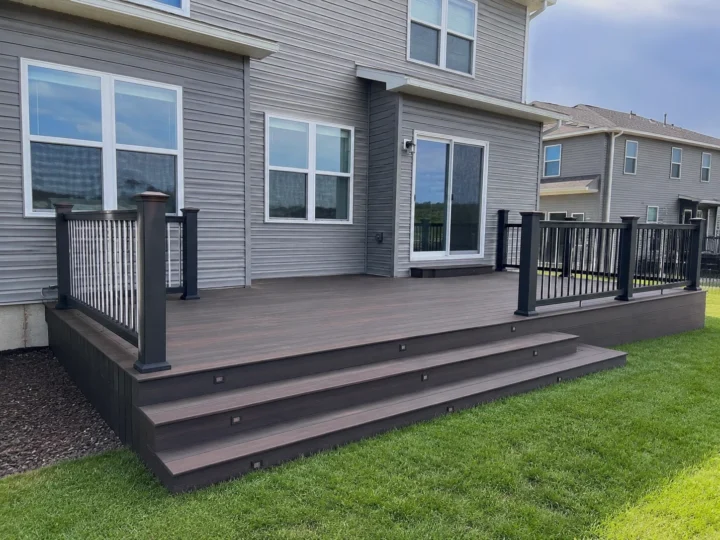
Choose a low-maintenance deck that fits how you live
The right low-maintenance decking should work for your home, your budget, and the way your family uses the space. Full sun, bare feet, pets, furniture, snow, grilling, shade, and the view from inside the house can all influence the best product and color.
We help Cedar Rapids homeowners compare capped composite and PVC decking as complete systems—not just loose samples—then coordinate the surface with framing, picture-frame borders, fascia, stairs, railings, ventilation, and compatible fasteners.
- Reducing staining and sealing is a priority
- Consistent color and finished edges matter
- Barefoot heat and traction need consideration
- A wood deck may be converted during replacement
- The existing frame may qualify for resurfacing
- Long-term material and installation value are being compared
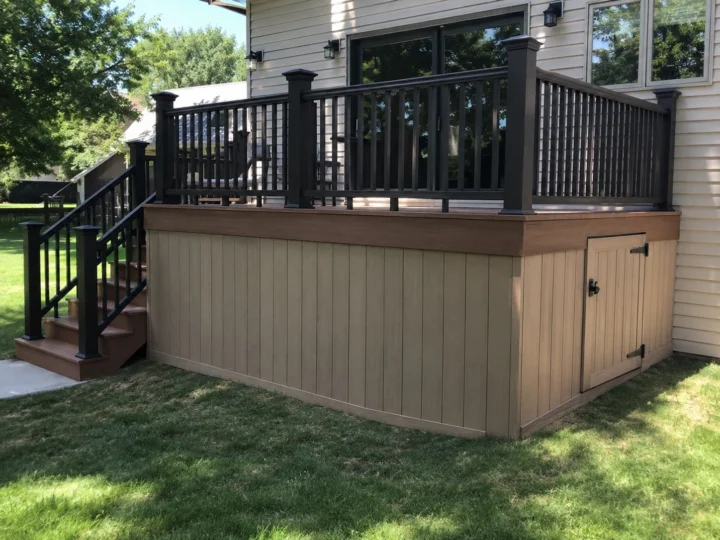
What is the difference between composite and PVC decking?
Both are low-maintenance alternatives to wood, and both can create a durable, polished deck. They are not the same material. Most capped composite decking combines wood fiber with plastic and protects the core with a manufactured cap. PVC decking—also called capped-polymer or advanced PVC by some manufacturers—uses an all-polymer core with no wood fiber.
There is no automatic winner for every Cedar Rapids deck. The better choice depends on moisture exposure, direct sun, deck height, desired appearance, budget, product line, color, and the details required for a manufacturer-compliant installation.
| What to compare | Capped composite decking | PVC / capped-polymer decking |
|---|---|---|
| Composition | A blended core commonly made with wood fiber and plastic, usually protected by a cap on three or four sides depending on the product line. | An engineered polymer core with no wood fiber, typically protected by a durable outer cap. |
| Moisture resistance | Designed to resist rot and moisture, but the exact cap coverage and approved uses vary by collection. | No wood fiber in the core, making premium PVC a strong option for persistent moisture, humidity, pool areas, and other demanding exposure. |
| Heat in direct sun | Surface temperature depends heavily on color, collection, sun exposure, and airflow; dark boards can become uncomfortable for bare feet. | Temperature still varies by color and collection. Some premium PVC lines offer heat-mitigation technology, but no outdoor board stays cool in every condition. |
| Expansion and movement | Expands and contracts as temperatures change. Correct gaps, joist spacing, fasteners, and breaker-board planning matter. | Generally has more noticeable thermal movement, so board length, gaps, fastening, and installation temperature require close attention. |
| Weight | Usually heavier because of its wood-plastic core, which can feel substantial during handling and installation. | Typically lighter than composite, which can simplify handling but does not remove the need for proper structural framing. |
| Appearance | Available across entry, midrange, and premium tiers with many realistic wood tones, grains, and multi-tonal color blends. | Premium collections can deliver deep embossing and varied color with clean finished edges; the look differs by collection and should be judged from full-size samples. |
| Scratch visibility | Scratch resistance and how marks show vary by cap, texture, sheen, and color. Dark or uniform boards may reveal marks differently. | Also varies by cap and collection. Some surfaces may show dents or scratches differently, so pets, furniture, and traffic should guide sampling. |
| Price | Usually offers the broader price range and a lower entry point than premium PVC, although high-end composite can overlap PVC pricing. | Often positioned toward the premium end. The total deck price must include structure, stairs, railings, fascia, fasteners, labor, and removal—not boards alone. |
| Warranties | Product and fade-and-stain coverage varies by manufacturer and collection. Registration, installation, care, exclusions, and labor coverage must be reviewed. | Premium PVC collections may offer longer product or fade-and-stain terms, but coverage still depends on the exact collection and current written warranty. |
| Often best suited for | Homeowners seeking low maintenance, broad color and price choices, realistic wood looks, and strong everyday value. | Homeowners prioritizing maximum moisture resistance, lighter boards, premium product tiers, or a specific PVC appearance and warranty package. |
Not sure whether composite or PVC is worth the difference?
Show us the deck location, sun exposure, rough size, and the look you want. We will help narrow the material category before you spend time comparing dozens of collections.
Composite decking brands we install
We install Trex®, TimberTech®, and Fiberon® decking for new composite decks, complete deck replacements, and resurfacing projects when the existing frame is sound and compatible.
Each manufacturer offers multiple collections and price levels. TimberTech, for example, sells both capped composite and Advanced PVC decking, so choosing a brand is only the beginning. We help narrow the product line by color, wood-grain appearance, surface temperature, traction, scratch visibility, moisture exposure, warranty terms, budget, and installation requirements.
Trex® decking
Compare available capped-composite collections, colors, grain patterns, heat considerations, warranty terms, and the compatible fasteners and finish details for your project.
TimberTech® decking
Review TimberTech capped-composite and Advanced PVC collections separately so material composition, moisture exposure, weight, comfort, price, appearance, and warranty coverage are not blurred together.
Fiberon® decking
Consider available Fiberon composite and PVC collections alongside color, texture, moisture exposure, maintenance expectations, warranty documents, project details, and total investment.
Have a Trex, TimberTech, or Fiberon product in mind?
Send the collection, color, or sample you are considering. We will connect that choice to the complete deck scope, product requirements, and current availability.
Get a finished composite deck—not an expensive surface with unfinished details
Composite and PVC boards are nonstructural finish materials with product-specific requirements. The structure, spacing, blocking, ventilation, fastening, edges, stairs, and railings still determine whether the finished deck looks clean and performs as intended.
Board line and color
Compare capped composite and PVC collections by tone, grain, texture, sheen, heat, traction, scratch visibility, warranty terms, and current availability.
Framing compatibility
Confirm joist spacing, flatness, ventilation, drainage, blocking, stair framing, and any resurfacing limitations.
Fasteners and borders
Choose hidden or face-fastening details, breaker boards, picture frames, fascia, seams, and finished stair edges.
Railing integration
Coordinate railing color, posts, sleeves, lighting readiness, gates, and stair rails with the selected decking.
Spend where the difference matters to you
Composite and PVC decking generally require a larger upfront investment than pressure-treated wood. The best value is the product tier that solves your real priorities without paying for features your deck does not need.
Match the exposure
Consider full sun, changing shade, moisture, pets, furniture, grilling, bare feet, snow, drainage, and cleaning—not only showroom appearance.
Verify the substrate
For resurfacing, inspect the frame before assuming new composite can be installed over old support work.
Compare total project cost
Include framing work, fascia, stairs, railings, fasteners, borders, demolition, disposal, and warranty-compliant installation when comparing alternatives.
Get a composite deck estimate built around the finished result
Tell us whether you need a new composite deck, complete replacement, or possible composite resurfacing. We will evaluate the project path first, then help narrow the surface and finish package around the result you want.
- 01
Show us the project
Share the property, current deck condition if one exists, rough size, photos, and how you want to use the space.
- 02
Compare composite and PVC options
Review composition, color, texture, heat, traction, moisture exposure, scratch visibility, warranty terms, fastening, fascia, borders, and compatible railing choices.
- 03
Price the finished deck
Confirm the project path, structural work, surface package, stairs, railings, edges, cleanup, and remaining selections.
Ready to compare composite options for your deck?
Start with your project goal and photos. Final board selections can be made after the site and complete scope are understood.
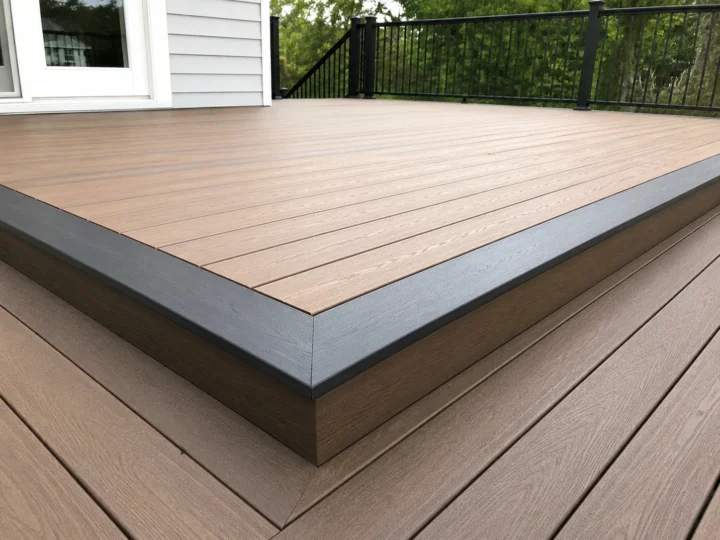
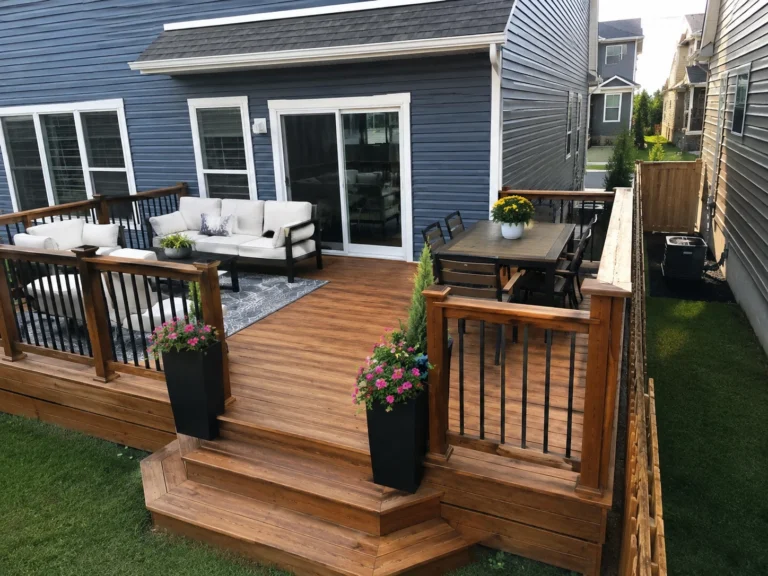
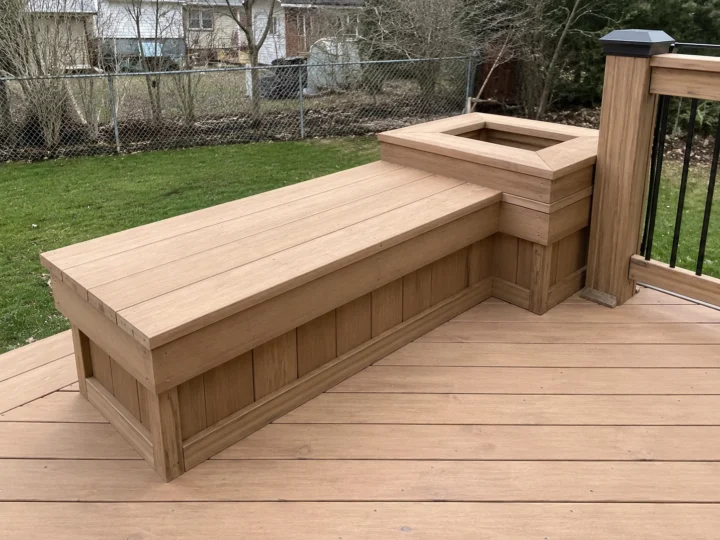
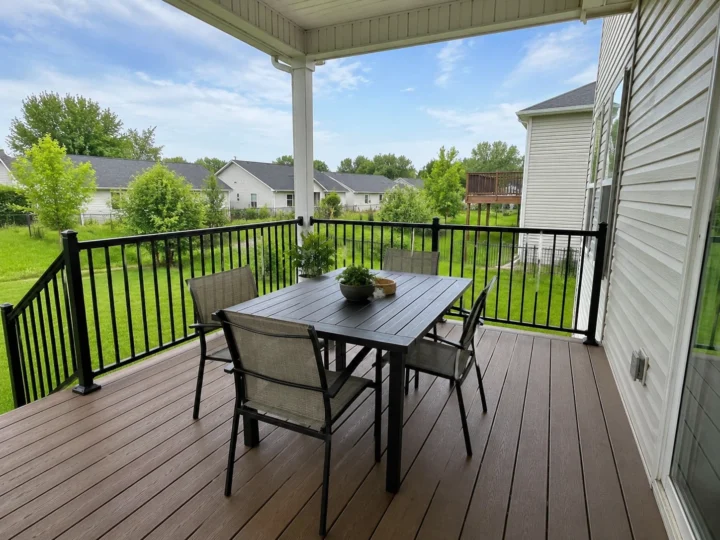
See composite decking installed as a complete system
Finished surfaces and installation details show how board direction, borders, stairs, railings, and edges come together.
Composite Decks for Eastern Iowa Homes
Cedar Rapids sun, humidity, rain, snow, freeze-thaw cycles, and changing shade make drainage, ventilation, thermal movement, traction, color, and surface temperature practical parts of composite and PVC deck planning. We serve homeowners in Cedar Rapids, Marion, Hiawatha, Robins, Fairfax, and nearby Eastern Iowa communities.
Questions About Composite Decks in Cedar Rapids
Is composite decking completely maintenance-free?
No. Composite avoids routine staining and sealing, but it still needs cleaning and product-specific care. Ventilation, drainage, stains, snow, furniture, heat, and manufacturer guidance still matter.
Can composite boards go over my existing deck frame?
Possibly, but the frame must be evaluated for condition, spacing, alignment, support, water damage, and remaining service life. Premium boards should not be installed over framing that cannot support a dependable result.
Does composite decking get hot in direct sun?
Surface temperature varies by color, product line, exposure, airflow, and weather. Darker boards and full-sun areas deserve special consideration when barefoot comfort is important.
Can composite be used for stairs and picture-frame borders?
Yes. Stair treads, risers, borders, fascia, fasteners, and railing transitions should be planned with the board manufacturer requirements and the supporting structure.
Is PVC decking the same as composite decking?
No. Capped composite usually combines wood fiber and plastic in the core, while PVC decking uses an engineered polymer core with no wood fiber. Both are low-maintenance decking categories, but they differ in weight, thermal movement, moisture performance, price, feel, and available product lines.
Which is better for an Iowa deck: composite or PVC?
Neither category is automatically best for every Iowa home. Composite often provides more price and appearance choices, while PVC may be attractive for demanding moisture exposure or a premium product tier. Direct sun, shade, deck height, airflow, color, budget, and the exact collection should drive the decision.
How much does a composite deck cost in Cedar Rapids?
A dependable price requires the deck size, height, site access, demolition, framing, stairs, railings, fascia, board collection, fasteners, borders, and other finish details. We price the complete installed project rather than advertising a misleading per-square-foot number that excludes major parts of the deck.
Do you install Trex, TimberTech, and Fiberon decking near Cedar Rapids?
Yes. We install Trex, TimberTech, and Fiberon products for qualifying projects in Cedar Rapids and nearby Eastern Iowa communities. Product-line availability and suitability are confirmed for the individual project; brand references do not imply dealer status or manufacturer affiliation.
Where do you install composite decks?
Composite projects may be considered in Cedar Rapids and Marion, Hiawatha, Robins, Fairfax, Palo, Center Point, Ely, Atkins, Mount Vernon, Lisbon, Toddville, Central City, Alburnett, Keystone, Van Horne, Springville, Anamosa, and nearby Eastern Iowa communities, depending on project scope and schedule.
Build a lower-maintenance deck around real-life use
Tell us whether you are starting new, replacing an old deck, or hoping to reuse a sound frame. We will help compare composite and PVC options and define the complete installed project.