Sound framing
Repair damaged joists, beams, posts, and nearby connections before covering them with new boards.

Address movement, damaged framing, worn boards, and unsafe access before they spread—and invest in the repair or rebuild that will give your deck dependable service.
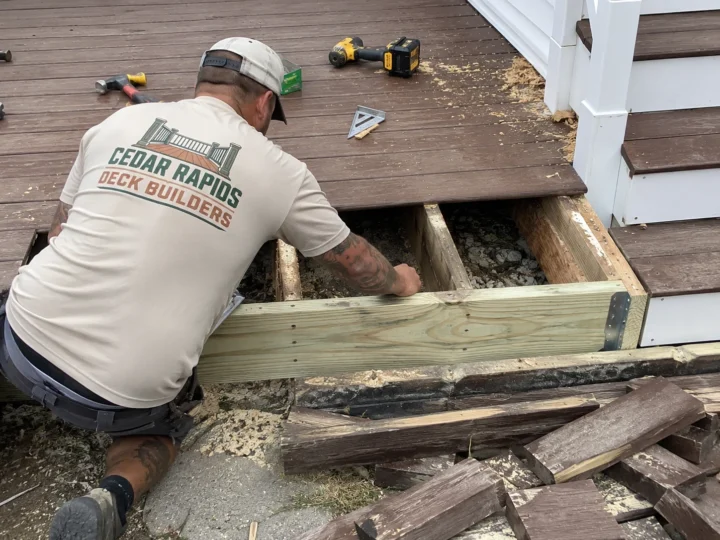
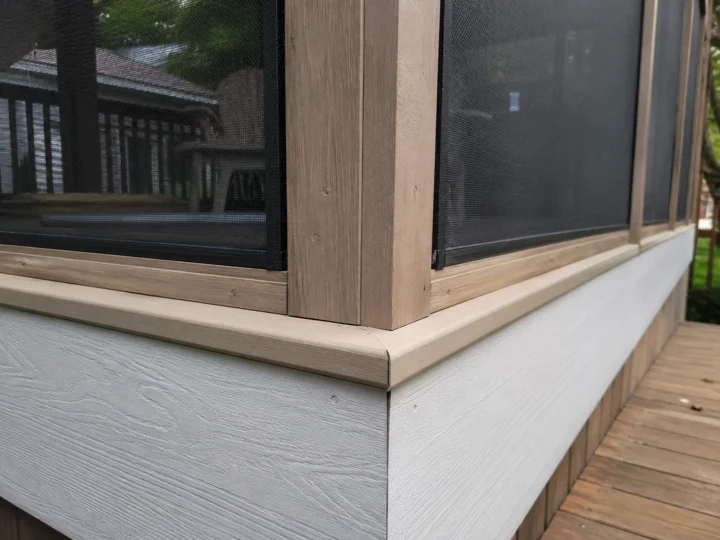
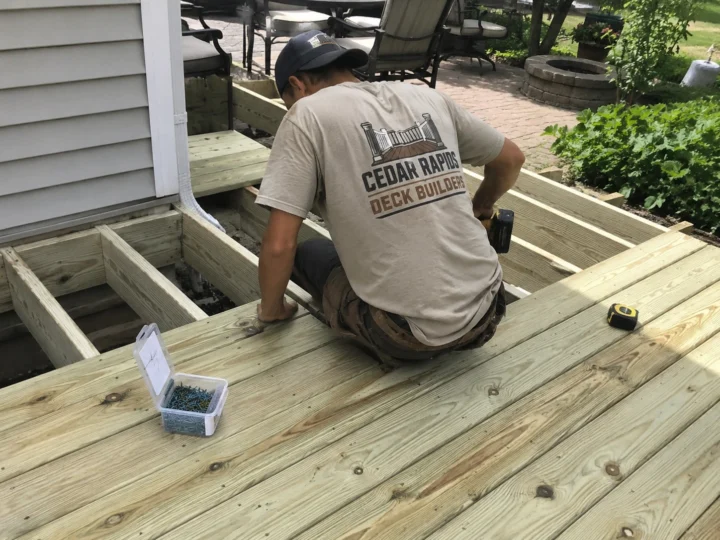
The Central City photos on this page show damaged-framing replacement, new pressure-treated deck boards, and screened-porch trim detail.
A better-looking deck only adds value when the framing, supports, connections, and access are ready to keep serving your home.
Repair damaged joists, beams, posts, and nearby connections before covering them with new boards.
Correct movement where people enter, exit, and depend on the deck for support.
Choose repair when it restores useful life and replacement when too many problems remain connected.
Central City homeowners can get help with everything from damaged framing and worn boards to complete replacement and screened-space improvements.
Address damaged framing, weak supports, movement, and connection problems below the surface of the deck.
See structural deck repairReplace an aging or poorly laid-out deck with a safer structure designed around how you want to use the space now.
See deck replacementRenew a sound deck with new boards, trim, and finish details when the supporting structure is still worth keeping.
See deck resurfacingCreate a protected outdoor room with screening, roof coverage, comfortable circulation, and details that fit your home.
Explore screened spacesSend the Central City project address, several clear photos, and a short description of what you want to build, repair, replace, or improve. Include any material preferences or features you already have in mind.
Repair may be the better value when the problems are limited and the surrounding structure remains dependable. Replacement becomes more practical when damage, movement, unsafe access, or a poor layout affects several parts of the deck.
Often, yes, when the damaged area can be reached and the surrounding structure remains dependable. The cause of the damage and its effect on nearby supports and connections must also be addressed.
Only when the frame, house connection, supports, footings, dimensions, ventilation, and layout remain suitable for the new surface. New boards should not cover hidden weakness.
When framing, supports, or connections are damaged, replacing the visible board is not enough. The affected area must be followed into the structure so the repair restores dependable support instead of hiding the warning sign.
If the frame remains sound, new boards or resurfacing may renew the deck. When several systems are failing, replacement can provide better long-term value and a chance to improve the layout.
If the property is outside Central City, choose a nearby community or view the complete service-area list.
Send photos of movement, damage, supports, stairs, railings, and the full deck so the visible problem can be understood in context.