
Deck Safety Inspections in Cedar Rapids
Get a contractor-led visual review when a deck feels soft, loose, uneven, weathered, or uncertain. We examine accessible components and visible concerns to help you choose between repair, structural work, resurfacing, or replacement.
- Visible deck condition reviewed from surface to supports
- Stairs, railings, movement, moisture, and connections considered
- Clear next-project direction without presenting the review as engineering certification
Contractor-led visual review • No concealed-condition guarantee • Cedar Rapids area service
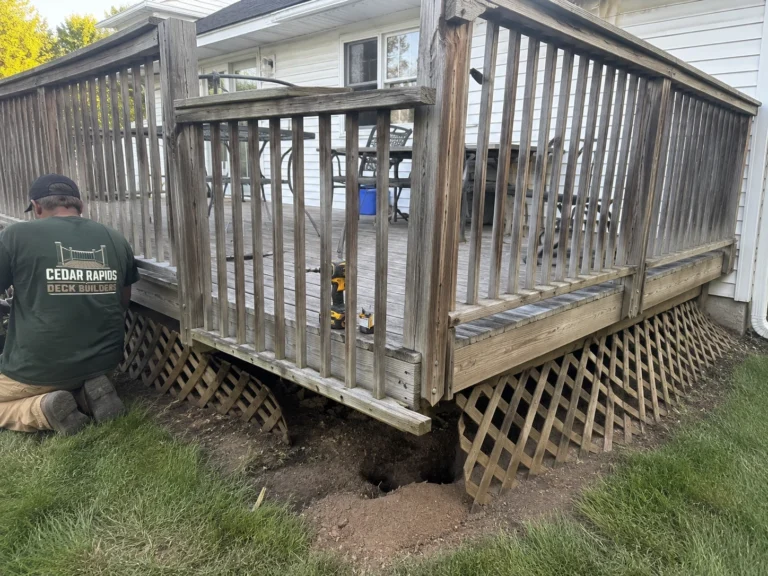
Use an inspection to choose the right level of work
Surface appearance does not reveal every important condition. A useful review considers the deck as a connected system and documents visible movement, decay, corrosion, poor connections, unsafe access, and water paths.
This service helps scope contractor work; it does not replace a licensed engineer, municipal inspector, invasive testing, or a code certification when those are required.
- The deck sways, bounces, or feels uneven
- Boards, stairs, or railings show softness or decay
- The ledger connection is hidden or questionable
- A home sale or purchase raises deck concerns
- Resurfacing is planned on older framing
- The deck will support heavier or more frequent use
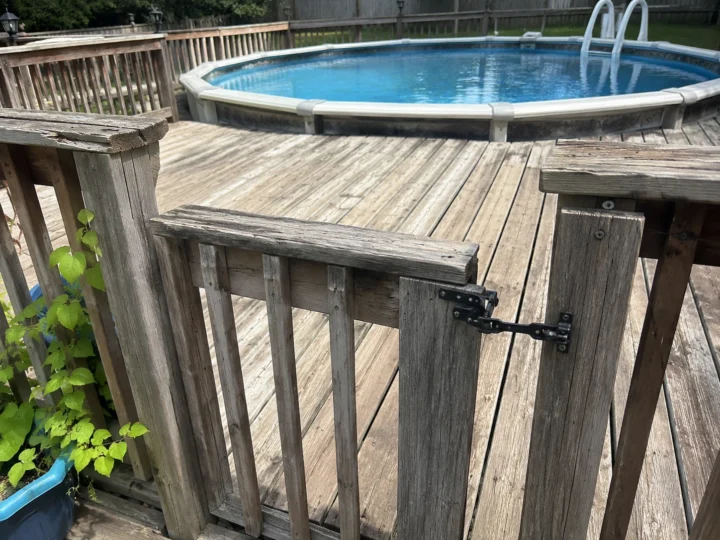
Review the visible system from surface to support
The assessment should connect observed symptoms to the parts that may require closer attention.
Surface and guards
Observe decking, fasteners, trip hazards, railings, posts, gates, and areas where moisture collects.
Stairs and landings
Review movement, stringers, treads, handrails, connections, support, and yard transitions.
Framing and supports
Observe accessible joists, beams, blocking, posts, footings, bracing, bearing, and visible alterations.
House connection and water
Review accessible ledger, flashing, fasteners, separation, corrosion, siding transitions, and water paths.
Turn observations into an ordered next-step list
The value of a review comes from prioritizing action—not producing a vague list of imperfections.
Identify immediate concerns
Flag visible movement, decay, failed guards, unsafe stairs, or connection problems that may justify limiting use.
Separate scope levels
Distinguish maintenance, targeted repair, structural repair, resurfacing prerequisites, and full-replacement indicators.
Escalate appropriately
Recommend engineering, municipal, specialty, or invasive review when a contractor’s visual assessment cannot answer the question.
Start with the concerns you can see, feel, or hear
The review focuses on accessible, visible conditions that can guide contractor work. It does not replace engineering analysis, municipal inspection, invasive testing, or certification when those are required.
- 01
Share the concern and history
Describe movement, softness, staining, damage, previous repairs, age if known, planned use, and any property-sale or resurfacing decision involved.
- 02
Review accessible components
Observe surface boards, stairs, guards, framing, posts, supports, house connection, fasteners, visible water paths, and signs of movement or decay.
- 03
Discuss the practical next step
Organize visible concerns by urgency and determine whether repair, structural work, resurfacing, replacement, or specialist input deserves the next conversation.
Not sure what your aging deck needs?
Send wide photos, closeups, and a description of anything soft, loose, uneven, wet, or moving.
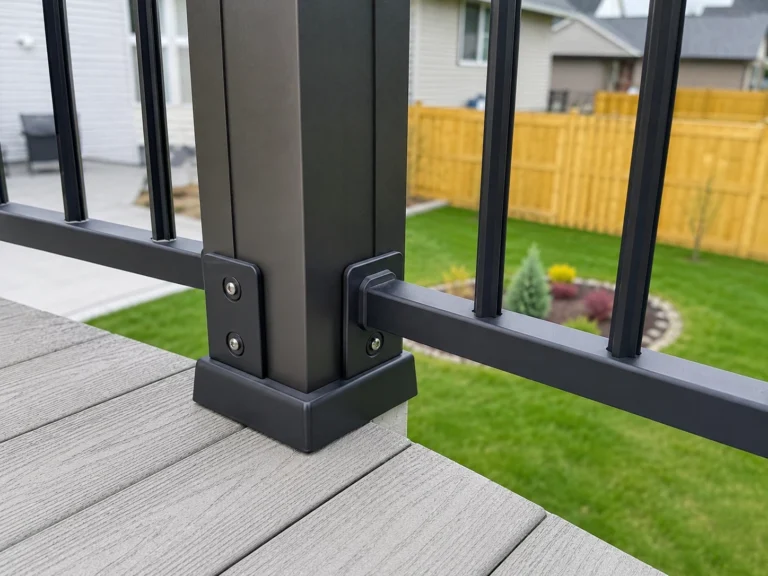
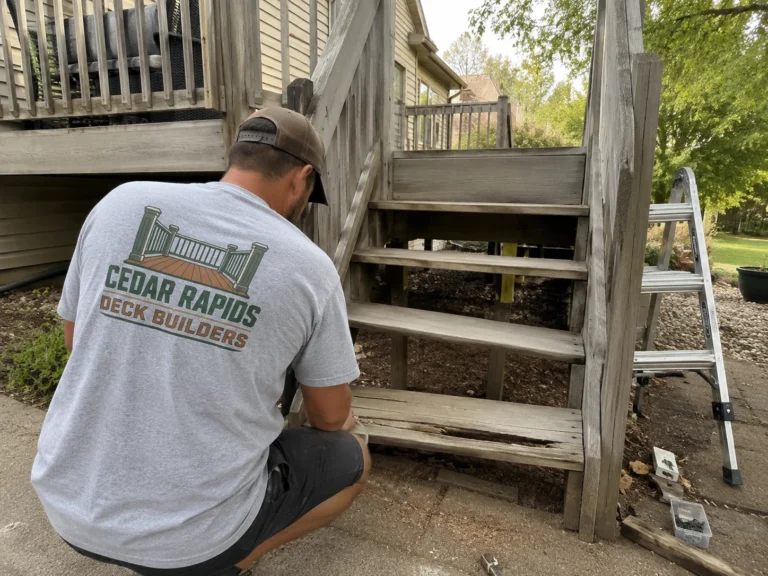
See the kinds of surfaces, stairs, guards, and connections worth reviewing
Weathered and connection-detail photos show why appearance alone cannot determine the correct project investment.
Deck Condition Reviews for Eastern Iowa Homes
Weather exposure, freeze-thaw movement, moisture, aging fasteners, snow, previous repairs, and hard-to-see house connections can create uncertainty about an older deck.
Questions About Deck Safety Inspections in Cedar Rapids
What does a deck condition review include?
It considers accessible visible decking, stairs, railings, framing, posts, supports, fasteners, house connection, water paths, movement, and decay indicators relevant to contractor work.
Is this an engineering or municipal inspection?
No. This is a contractor-led visual condition review. It is not an engineering certification, municipal inspection, invasive test, code certification, or guarantee of concealed conditions.
When should I request a deck condition review?
Consider one when the deck moves, feels soft, has an uncertain repair history, is being considered for resurfacing, raises concerns during a property decision, or no one knows whether repair or replacement is appropriate.
Can the review identify every hidden problem?
No. Boards, trim, cladding, soil, and enclosed areas can conceal important conditions. The review should state visible limits and recommend further access or specialist input when necessary.
Where are deck condition reviews available?
Contractor-led deck reviews may be considered in Cedar Rapids and Marion, Hiawatha, Robins, Fairfax, Palo, Center Point, Ely, Atkins, Mount Vernon, Lisbon, Toddville, Central City, Alburnett, Keystone, Van Horne, Springville, Anamosa, and nearby Eastern Iowa communities, depending on scope and schedule.
Get clearer direction before paying for the wrong deck project
Tell us what concerns you and what decision you are trying to make. We will review accessible visible conditions and discuss the practical next step.