Repair urgent problems
Correct movement, rot, damaged boards, loose rails, and unsafe stairs before adding new features.

Restore safe use after weather and age, then add the shade, privacy, layout, or outdoor-living features that will make you enjoy the deck more often.
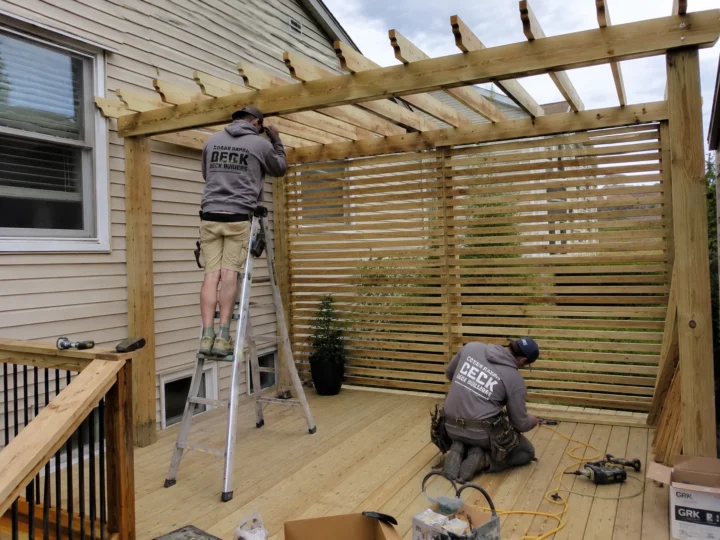
The Springville photos on this page show pergola and privacy-screen construction, a weathered deck needing replacement, and a pergola being added over an existing deck.
Aging boards, loose components, and winter wear can make a deck feel like a chore or a safety concern. Restoring dependable use comes first so later comfort upgrades are built on a deck worth improving.
Once the deck is ready, a pergola, privacy screen, better stairs, or a more useful layout can turn the space into a favorite part of the property.
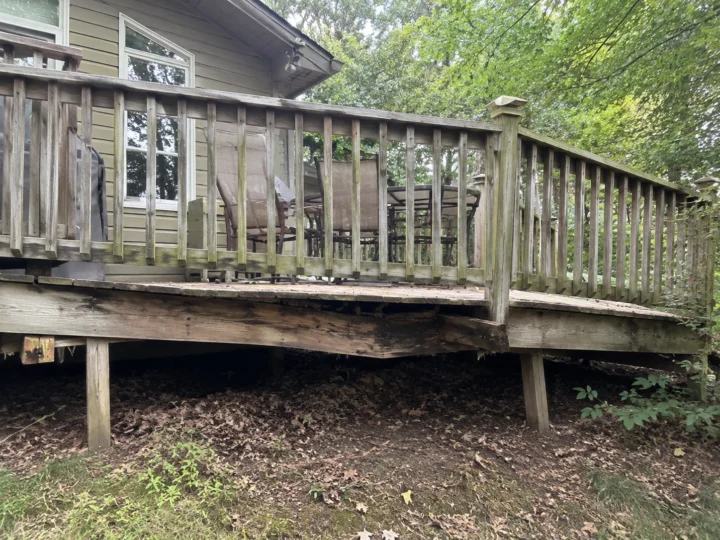
The most valuable outdoor-living upgrade starts with a deck that is structurally dependable and comfortable to access.
Correct movement, rot, damaged boards, loose rails, and unsafe stairs before adding new features.
Place pergolas and privacy screens around the sun, views, airflow, and hours you use the deck.
Give seating, grilling, conversation, and yard access distinct room to work together.
Send the Springville project address, several clear photos, and a short description of what you want to build, repair, replace, or improve. Include any material preferences or features you already have in mind.
Repair may be the better value when the problems are limited and the surrounding structure remains dependable. Replacement becomes more practical when damage, movement, unsafe access, or a poor layout affects several parts of the deck.
Possibly. The existing structure and connections must be able to support it, and post placement, wind, shade direction, headroom, furniture, and future maintenance all need attention.
Replacement becomes more practical when deterioration, movement, unsafe access, or a poor layout affects several connected parts and repeated repairs would provide limited additional service.
If the property is outside Springville, choose a nearby community or view the complete service-area list.
These services help Springville homeowners solve weather and age-related problems before adding the shade, privacy, or layout improvements they want.
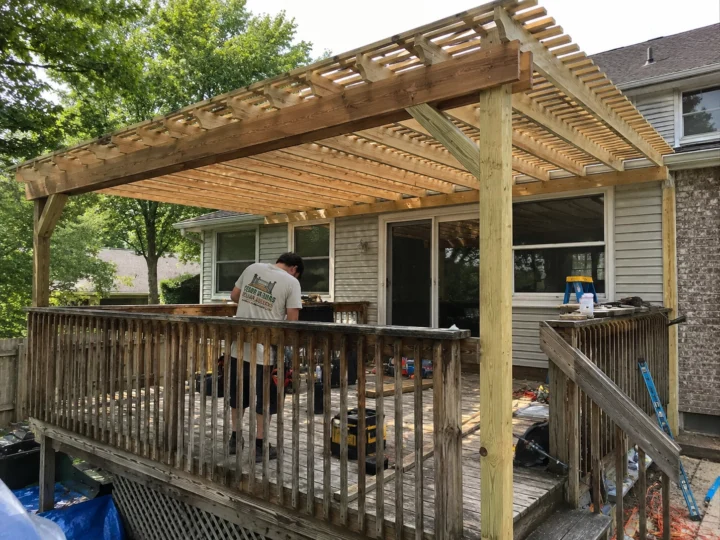
Address movement, damaged boards, loose rails, and stair problems that become visible after snow, ice, and freeze-thaw weather.
See winter damage repairReplace an aging or poorly laid-out deck with a safer structure designed around how you want to use the space now.
See deck replacementMake your deck more comfortable and private with shade, screening, and useful features planned around the way you live outside.
Explore pergolas and add-onsTurn a plain deck into a better place to cook, gather, relax, and move between the house and backyard.
Explore outdoor livingSend photos of the worn or damaged areas plus the shade, privacy, or outdoor-living features you would like to add.