Wood Deck Building in Cedar Rapids
Build a durable, inviting wood deck around the budget and natural look that fit your home. We build pressure-treated and cedar decks in Cedar Rapids, with the structure, stairs, railings, finishing details, and care plan considered before construction begins.
- Pressure-treated decks with strong value and design flexibility
- Cedar decks with natural color, grain, and character
- New construction, complete rebuilds, stairs, railings, fascia, and skirting
- Clear guidance on upkeep and the complete installed investment
Local wood deck contractor • Pressure-treated and cedar options • Complete written scope
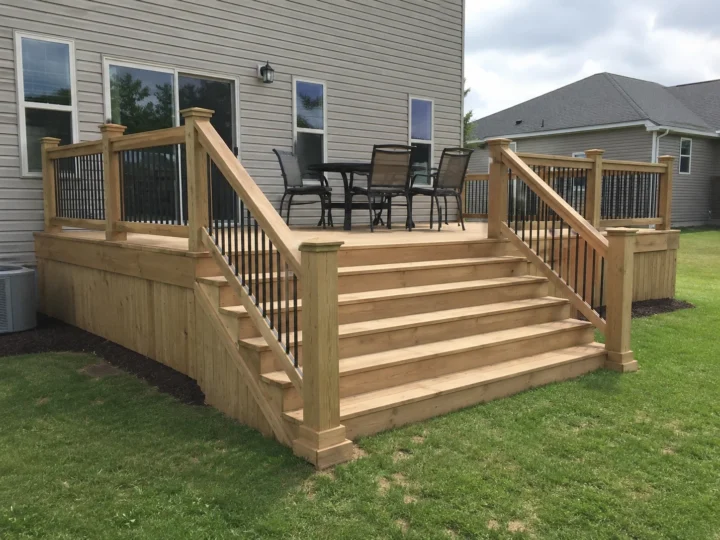
A well-planned wood deck can fit more homes and more budgets
Wood remains one of the most flexible ways to build a full-size backyard deck without forcing every homeowner into a premium material tier. Pressure-treated lumber can keep the starting investment practical, while cedar offers a more distinctive natural appearance for homeowners who want to invest more in the visible surface.
The best value does not come from choosing lumber alone. Size, height, stairs, railing style, site access, demolition, framing, skirting, built-in details, and finishing all shape the final price. We help prioritize the features you will use most so the deck feels complete without spending in places that add little value to your household.
- A natural wood appearance fits the home and yard
- A practical initial investment is important
- Periodic cleaning, staining, or sealing is acceptable
- The layout may include custom stairs, railings, benches, or privacy details
- Individual boards should remain serviceable in the future
- The budget should go toward usable size and important features first
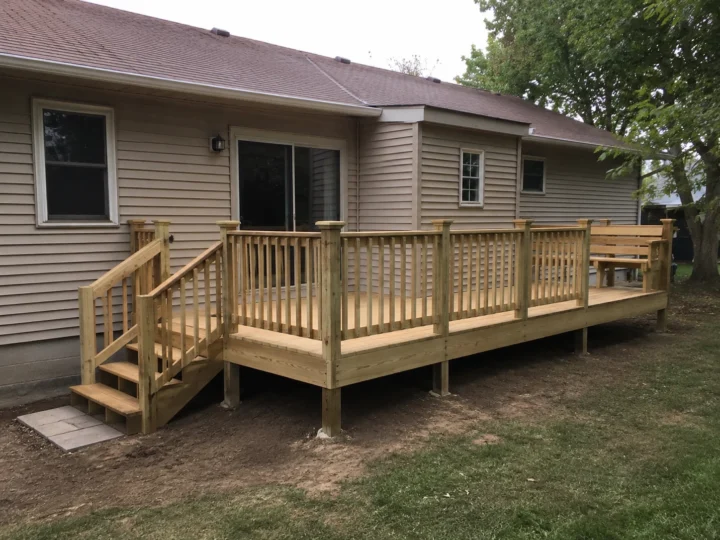
Which wood decking is right for your Cedar Rapids home?
Pressure-treated lumber and cedar can both produce a strong, attractive deck when the material grade, structure, fastening, drainage, finishing, and maintenance fit the project. Pressure-treated wood is not a lesser deck by default; it is often the smartest way to maximize usable space and important features within a practical investment range.
Cedar usually carries a higher material investment and is chosen for its natural color, grain, lighter feel, and distinctive appearance. The right choice depends on what you want to see, what you want to spend initially, how you plan to finish the wood, and how much ongoing care fits your household.
| What to compare | Pressure-treated decking | Cedar decking |
|---|---|---|
| Material and treatment | Lumber pressure-treated with preservatives to improve resistance to decay and insect damage; available species and appearance vary by supplier and grade. | Naturally durable softwood valued for its color, grain, aroma, and dimensional characteristics; grade and board quality still matter. |
| Initial investment | Usually the more budget-friendly wood decking path and can preserve room for a larger footprint, better stairs, railings, or other useful features. | Typically requires a higher material investment, especially when selected for broad visible surfaces and coordinated cedar details. |
| Appearance | A familiar wood-deck look that can accept many stain tones once moisture conditions and finish instructions allow. | Naturally warm color and pronounced grain variation that many homeowners choose as a visible design feature. |
| Weight and handling | Often heavier when newly treated and wet; moisture content can affect handling, drying, and when a finish should be applied. | Generally lighter and easier to work with, while still requiring careful board selection, fastening, and end-detail planning. |
| Movement and checking | Can shrink, cup, twist, or check as it dries. Board quality, spacing, fastening, exposure, and ongoing care influence the finished result. | Often valued for relative dimensional stability, but it is still natural wood and can weather, split, check, or move with moisture changes. |
| Moisture and Iowa weather | Preservative treatment supports exterior durability, but drainage, airflow, ground clearance, compatible hardware, cut treatment, and finishing remain important. | Naturally resistant to decay, but Cedar Rapids rain, snow, sun, shade, and freeze-thaw exposure still make drainage, airflow, fastening, and finishing important. |
| Maintenance | Needs periodic cleaning and may need staining or sealing based on exposure, appearance goals, wood condition, and finish instructions. | Also needs cleaning and protective finishing when the goal is to preserve color and slow weathering; unfinished cedar naturally changes color over time. |
| Repairs and modifications | Individual boards and site-built details are often straightforward to repair or modify, subject to matching, framing condition, and material availability. | Repairable and workable, although matching aged color, grain, grade, dimensions, and existing finish may take more care. |
| Often best suited for | Homeowners seeking a dependable real-wood deck, broad design flexibility, a practical starting investment, and more budget room for size or features. | Homeowners prioritizing natural color and grain, a lighter premium wood surface, custom visible details, and a higher initial material allowance. |
Not sure whether pressure-treated or cedar fits your project?
Show us the deck location, rough size, photos, and the features you care about most. We will help compare the material direction as part of the complete installed deck—not as an isolated board price.
The best wood deck value comes from the complete build—not the board price alone
A dependable wood deck needs a structure and finish package that work together. We plan the lumber, framing, moisture management, stairs, railings, fasteners, trim, and future maintenance around the site instead of treating the decking boards as the entire project.
Lumber selection
Match pressure-treated or cedar decking to the appearance, exposure, maintenance preference, project features, and investment range.
Moisture management
Protect ledger areas, maintain drainage and airflow, avoid soil contact, and detail gaps so the deck can dry.
Fastening and cuts
Use compatible fasteners and treat vulnerable cuts, connections, and edges as part of the build plan.
Care plan
Set expectations for drying, cleaning, staining, sealing, inspections, and localized repairs over the deck’s life.
Put the budget toward the deck features your family will actually use
Wood can preserve room in the project budget for usable square footage, wider stairs, a better railing, privacy, built-in seating, or a layout that fits the yard. We help separate must-haves from upgrades so the estimate supports the daily experience you want.
Protect the usable footprint
Start with enough room for furniture, grilling, circulation, and the door-to-yard route before adding decorative upgrades.
Choose details that earn their cost
Compare railing, stair width, landings, skirting, privacy, benches, lighting readiness, and finish work by how much they improve safety and everyday use.
Own the maintenance plan
Include cleaning, staining or sealing, inspections, and localized repairs when comparing pressure-treated wood, cedar, and lower-maintenance decking.
Get a wood deck estimate built around your priorities and budget
A useful estimate connects the site and structure to the finished outdoor space. We define the lumber direction, size, height, footings, framing, stairs, railings, trim, access, demolition if needed, and maintenance expectations so you can understand what the complete project includes.
- 01
Share the space and goal
Tell us whether you need a new wood deck or complete rebuild, plus the location, rough size, height, access, photos, and everyday uses that matter.
- 02
Choose the wood direction
Compare pressure-treated and cedar options, then choose the layout, stairs, railing, privacy, skirting, visible details, and finishing direction that fit your priorities.
- 03
Review the complete scope
Confirm demolition if needed, structure, decking, stairs, railings, trim, cleanup, selections, and the care expectations that continue after construction.
Ready to see what your wood deck budget can build?
Send the property location, photos, rough size, and the features that matter most. We will help shape a practical pressure-treated or cedar deck scope around the finished result.
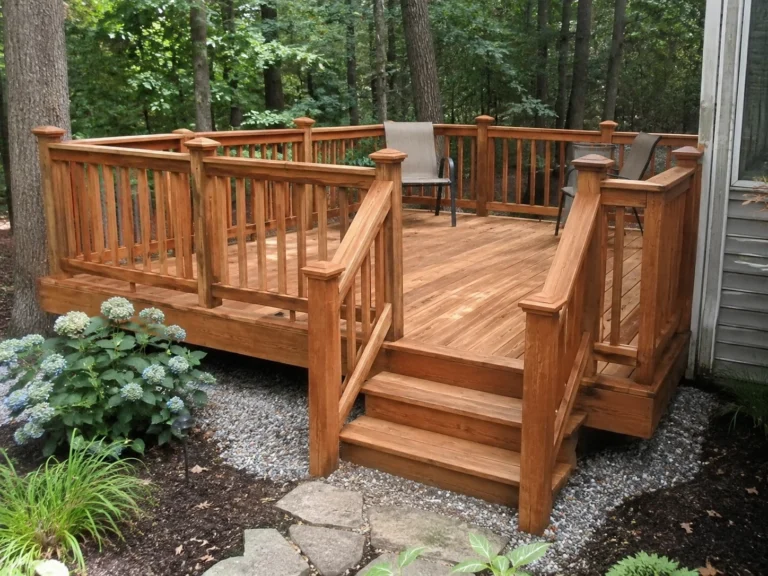
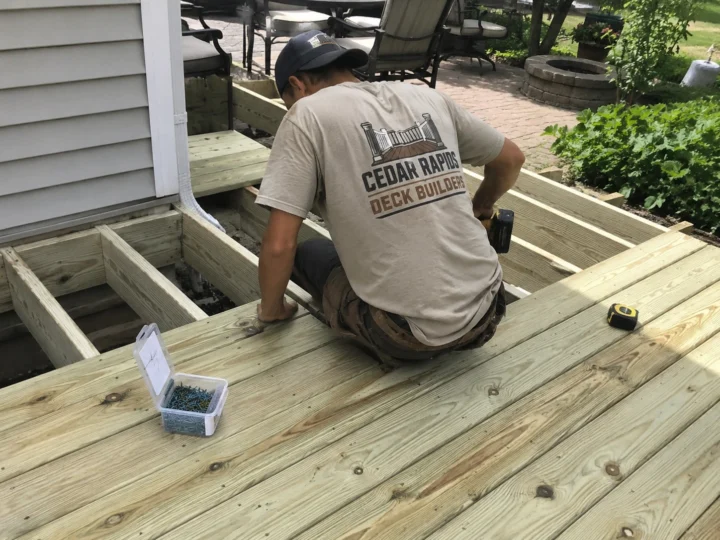
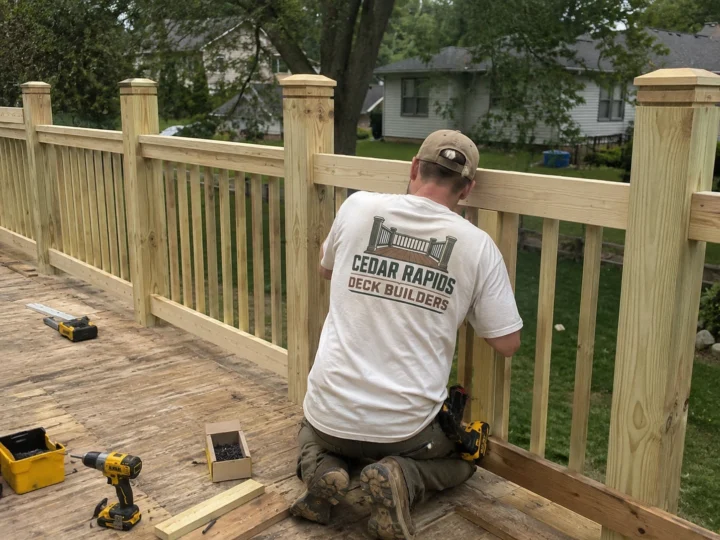
See pressure-treated and cedar deck work from Eastern Iowa projects
Finished decks and active construction details show how lumber choice, structure, stairs, railings, and natural wood character come together.
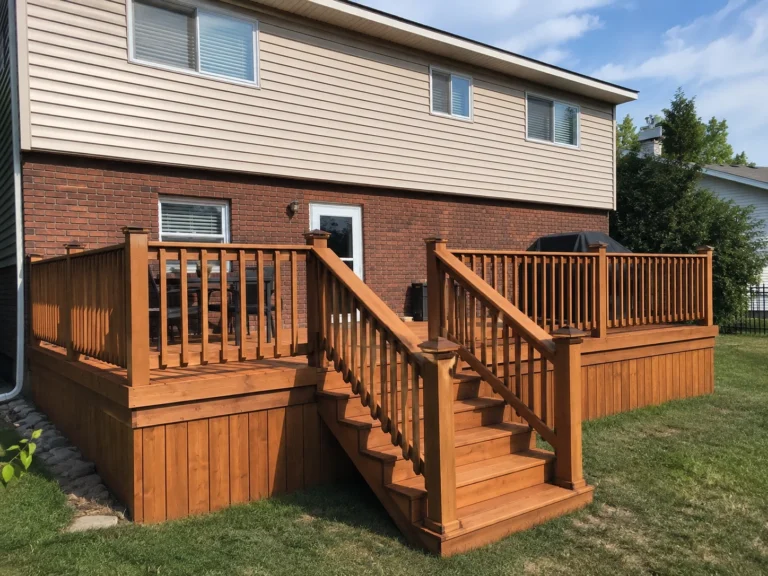
Wood Deck Building for Cedar Rapids and Eastern Iowa Homes
We build pressure-treated and cedar decks in Cedar Rapids, Marion, Hiawatha, Robins, Fairfax, and nearby Eastern Iowa communities. Seasonal moisture, direct sun, snow, freeze-thaw cycles, shade, and leaf buildup all affect how wood dries and ages, so airflow, drainage, compatible fasteners, end cuts, and future finishing access matter from the start.
Questions About Wood Decks in Cedar Rapids
What type of wood is commonly used for decks?
Pressure-treated lumber is a practical, widely used option for deck framing and visible surfaces. Cedar is often selected for decking, railings, privacy details, or complete visible finish packages when its natural color and grain fit the homeowner’s goals. The right grade, dimensions, treatment category, and hardware depend on where each component is used.
How much does a wood deck cost in Cedar Rapids?
Wood deck cost depends on size, height, footings, framing, site access, demolition, pressure-treated or cedar selection, stairs, railings, skirting, finish details, permits, and added features. Pressure-treated lumber often provides the most practical starting investment, but a complete property-specific estimate is more useful than a square-foot price that leaves out major parts of the build.
Is pressure-treated lumber or cedar better for a deck?
Neither is automatically better for every home. Pressure-treated decking often delivers strong value and leaves more budget for size, stairs, railings, or other features. Cedar is typically chosen for its warm natural color, grain, lighter weight, and premium wood appearance. Both need correct construction and ongoing care.
Can I combine pressure-treated framing with cedar decking?
Often, yes. Many wood decks use appropriate pressure-treated structural lumber below a different visible decking or railing material. The complete assembly still requires compatible fasteners and connectors, suitable framing dimensions and spacing, drainage, airflow, flashing, and finish planning.
When can a new wood deck be stained or sealed?
Timing depends on the lumber moisture, product, weather, exposure, and finish instructions. Newly installed pressure-treated boards may need time to dry before accepting a finish properly.
How often will a wood deck need maintenance?
The interval varies with sun, shade, traffic, moisture, cleaning, finish product, and the condition of the wood. Regular observation and timely cleaning or refinishing are more useful than assuming one fixed schedule.
Does cedar decking still need to be stained or sealed?
Cedar can be allowed to weather naturally, but homeowners who want to preserve more of its original color or add protection generally consider an appropriate penetrating finish. Timing and product choice should follow the wood condition, moisture level, exposure, preparation requirements, and finish manufacturer instructions.
Can a pressure-treated deck look high-end?
Yes. A clean layout, carefully selected boards, consistent fastening, picture-frame or border details where appropriate, well-proportioned stairs, coordinated railings, fascia, skirting, and a quality finish can make a pressure-treated deck feel intentional and complete without changing its value-focused material direction.
Can damaged wood deck boards be replaced later?
Often yes, when the framing and surrounding components remain dependable. Board matching, fasteners, color differences, and the reason for the original damage should be considered before isolated replacement.
Where do you build wood decks?
Wood-deck projects may be considered in Cedar Rapids and Marion, Hiawatha, Robins, Fairfax, Palo, Center Point, Ely, Atkins, Mount Vernon, Lisbon, Toddville, Central City, Alburnett, Keystone, Van Horne, Springville, Anamosa, and nearby Eastern Iowa communities, depending on project scope and schedule.
Build the wood deck your home and budget can support
Tell us the space you want, the features that matter, and whether pressure-treated value or cedar character feels closer to your goal. We will help shape the complete installed project around both the result and the investment.