Deck Framing & Structural Repair in Cedar Rapids
Address sagging, bouncing, settlement, damaged joists or beams, leaning posts, footing concerns, ledger separation, and other structural problems by tracing how the deck carries load from the surface to the ground and house.
- Joist, beam, post, blocking, and support repairs
- Footing, settlement, and house-connection concerns evaluated
- Surface finishes protected by correcting structural causes first
Structural deck repair • Load path and water exposure considered • Cedar Rapids area service
Structural repairs begin with the complete load path
A deck is a connected structure. Replacing one damaged member without understanding what overloaded it, exposed it to moisture, or allowed movement can leave the original cause in place.
The repair scope should identify which components can remain, which need reinforcement or replacement, and how the corrected work will transfer loads and manage water.
- The deck sags, bounces, racks, or shifts
- Joists or beams show cracks, rot, or poor bearing
- Posts are leaning, damaged, or poorly supported
- Footings appear settled or affected by frost movement
- The ledger area shows separation or water damage
- Previous structural alterations look incomplete or improvised
Correct the component and the reason it failed
Structural work should restore a dependable path from the deck surface to the ground and house.
Joists and blocking
Repair or replace damaged members, improve bearing, and add blocking or reinforcement where the defined scope requires it.
Beams and posts
Address decay, undersized support, poor connections, movement, or load-transfer problems at major supports.
Footings and foundations
Review settlement, frost movement, soil contact, post bases, and support conditions before rebuilding above them.
Ledger and flashing
Correct attachment, corrosion, separation, water entry, and vulnerable transition details at the home.
Protect finishes by solving structure first
New boards and railings should not hide unresolved movement, decay, or water paths.
Expose what matters
Remove only the material needed to inspect connections, bearing, damage boundaries, and the cause of movement.
Sequence the repair
Support the deck safely, correct primary load-path problems, then rebuild affected stairs, guards, or finishes.
Document limits
Identify what was observed, what remains concealed, what is included, and how additional hidden damage would be handled.
Start with movement, damage, and the full support system
Structural repair should connect the symptom to the joists, beams, posts, footings, ledger, blocking, bracing, fasteners, and water exposure that influence it.
- 01
Describe what changed
Share photos and note sagging, bounce, leaning, separation, rot, settlement, previous alterations, or the area that feels different.
- 02
Trace the accessible load path
Review the affected surface, joists, beams, posts, bearings, footings, bracing, ledger, flashing, and visible connections.
- 03
Define corrective work
Identify members that can remain, components needing reinforcement or replacement, water-management work, access limits, and finish restoration.
Concerned about deck movement or damaged framing?
Send photos of the top, underside, posts, house connection, and the area where the problem is most noticeable.
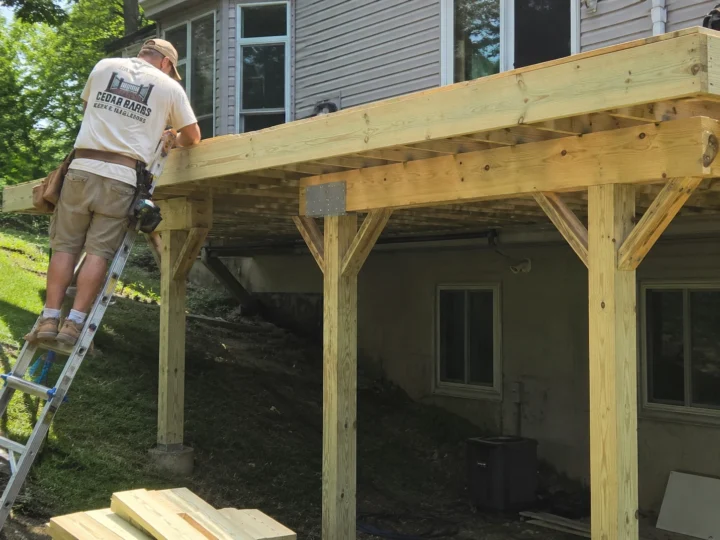
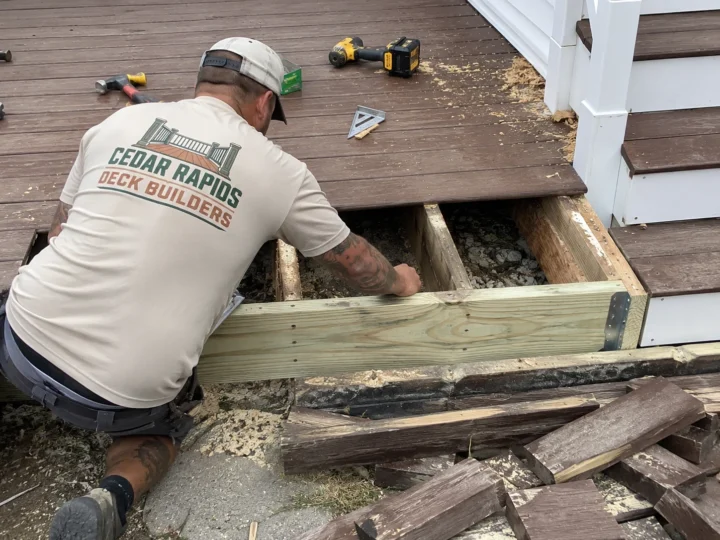
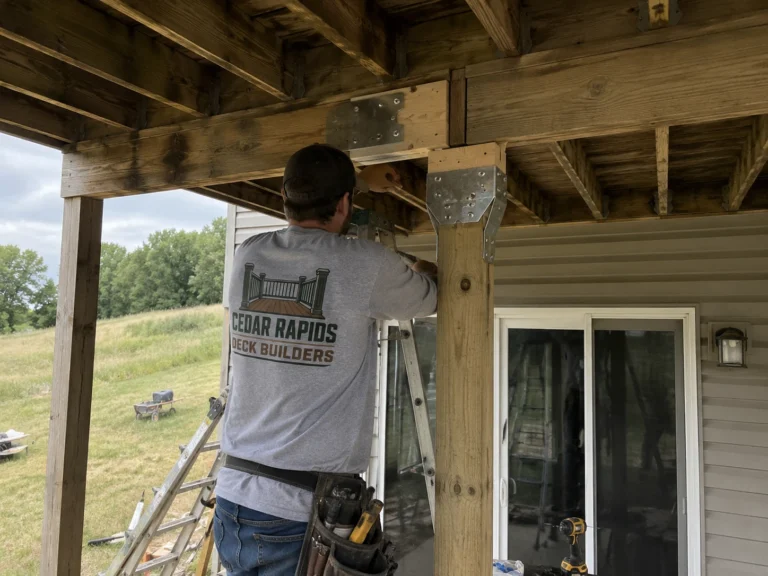
See framing, replacement members, posts, and support details
These jobsite photos show the structural components that must work together below a dependable deck surface.
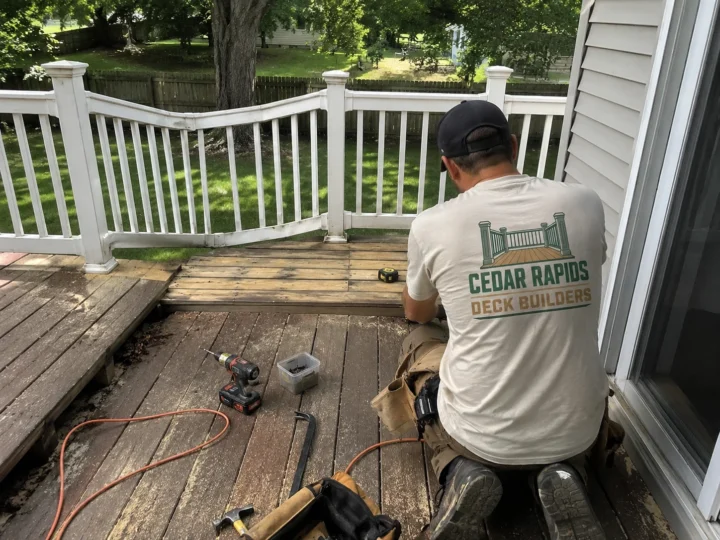
Structural Deck Repair in Eastern Iowa
Freeze-thaw soil movement, moisture, failed flashing, snow loads, aging fasteners, poor drainage, and previous alterations can affect how a deck transfers loads and stays connected over time.
Questions About Deck Framing & Structural Repair in Cedar Rapids
What are signs of structural deck problems?
Sagging, excessive bounce, racking, leaning posts, separated connections, cracked or rotted joists and beams, settled supports, movement at the house, and repeated failure in the same area deserve closer attention.
Can a damaged deck beam or joist be repaired?
Sometimes a component can be reinforced or selectively replaced, but the cause, load, bearing, connections, moisture exposure, surrounding condition, and access must be understood before choosing the method.
What is the deck ledger and why does it matter?
The ledger is a critical connection on many attached decks. Fastening, flashing, water management, house structure, and visible separation influence whether that connection can perform dependably.
Does structural repair include new decking or railings?
Finish restoration may be included where required to access and complete the repair. Surface-wide renewal and standalone railing work should be clearly defined so structural work does not quietly expand into an unrelated project.
Where do you perform structural deck repair?
Structural deck repair may be considered in Cedar Rapids and Marion, Hiawatha, Robins, Fairfax, Palo, Center Point, Ely, Atkins, Mount Vernon, Lisbon, Toddville, Central City, Alburnett, Keystone, Van Horne, Springville, Anamosa, and nearby Eastern Iowa communities, depending on project scope and schedule.
Correct the structure before covering it with finishes
Show us where the deck moves, sags, separates, or shows damage. We will help define a structural repair around the connected load path.