Water management
Flashing, slope, gaps, ventilation, and clear drainage paths help the deck dry instead of holding moisture.

Iowa decks experience freeze-thaw cycles, snow, summer heat, humidity, rain, and large temperature swings. Good performance depends on drainage, flashing, ventilation, fastening, movement allowances, and material-specific maintenance.
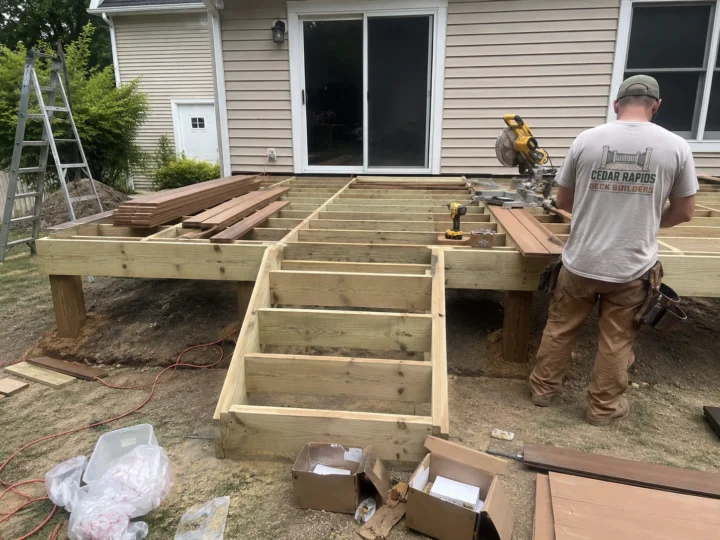
No deck material operates independently of its framing and details. Iowa’s wet seasons, summer heat, winter cold, snow, and repeated freeze-thaw cycles reward assemblies that shed water, dry efficiently, allow material movement, and keep critical connections inspectable.
Flashing, slope, gaps, ventilation, and clear drainage paths help the deck dry instead of holding moisture.
Footings, framing, boards, fasteners, and trim must accommodate seasonal soil and material movement.
Critical connections and moisture-prone areas should remain reachable for cleaning and periodic inspection.
Repeated wetting can accelerate decay around fasteners, end grain, stair connections, ledger areas, and places where debris holds moisture. Flashing, drainage paths, ventilation, and details that allow drying matter as much as surface appearance.
Water that enters cracks or poorly drained areas expands when frozen. Movement can worsen splits, heaving, loose connections, and surface damage. Footing depth and site drainage are project-specific planning considerations.
Material choice is only one part of durability; our deck building service explains how framing, drainage, connections, and finishes work as one system. Learn more about deck building approach
Wood can swell, shrink, check, and cup. Composite and PVC products also expand and contract, but in different ways. Correct gaps, fasteners, joist spacing, and installation temperatures help the assembly perform as intended.
Wood may need cleaning and protective finishes; manufactured decking needs product-appropriate cleaning and inspection. All decks benefit from periodic checks of guards, stairs, connections, drainage, and areas where water collects.
These services are the closest match for the conditions and decisions covered in this guide.
Photos and checklists can help organize questions, but they cannot confirm concealed conditions, dimensions, fasteners, footing depth, structural capacity, or local requirements. If safety, load capacity, or the correct scope is uncertain, limit use as appropriate and have the property evaluated in person.
Plan a complete deck system for local conditions and long-term use.