Repair
Best suited to limited, well-defined problems when surrounding structure and compatible materials remain serviceable.

Localized damage may justify repair; widespread deterioration, recurring movement, unsuitable framing, or a layout that no longer meets your needs may make replacement the better investment. The decision should follow a structural and scope-based evaluation.
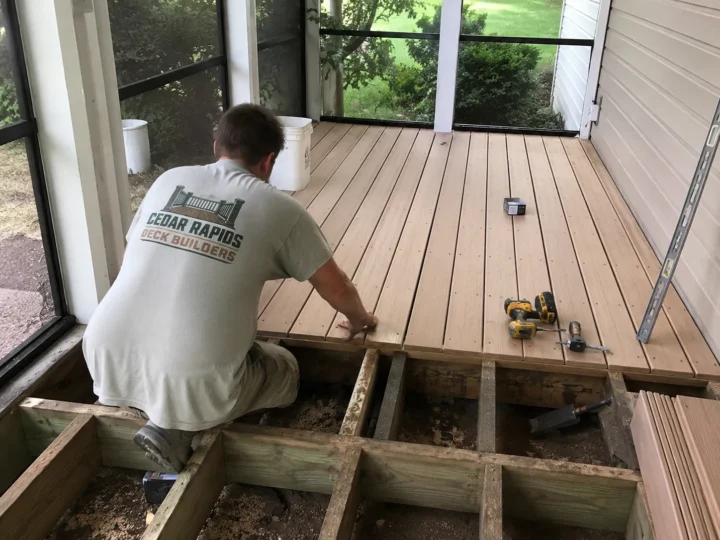
The right answer depends less on the number of damaged boards than on whether the damage is isolated, why it occurred, and how much dependable life remains in the connected structure. Repair, resurfacing, and replacement are three different scopes and should be compared as complete outcomes.
Best suited to limited, well-defined problems when surrounding structure and compatible materials remain serviceable.
A middle path when the frame is sound but most decking, railing, or visible components have reached the end of useful life.
More predictable when deterioration, movement, structural deficiencies, repeated repairs, or layout problems are widespread.
Individual boards, a short railing section, isolated stair components, a gate, or a limited framing area may be repairable when the remaining deck is sound and the repair can integrate safely.
Widespread rot, failing footings, major ledger concerns, repeated repairs, significant movement, undersized framing, or an obsolete layout can make complete replacement more predictable and economical over time.
If damage appears limited, start with our deck repair service; if problems are widespread, compare that scope with full replacement before committing. Learn more about deck repair service
When framing is sound but most surface boards and rails are worn, resurfacing may preserve the structure while replacing the visible system. It still requires inspection, blocking, spacing, stair, and flashing review.
Consider remaining service life, access, permit implications, matching materials, hidden-damage risk, maintenance, and whether the finished result solves the homeowner’s actual needs. A written option comparison is more useful than a visual guess.
These services are the closest match for the conditions and decisions covered in this guide.
Photos and checklists can help organize questions, but they cannot confirm concealed conditions, dimensions, fasteners, footing depth, structural capacity, or local requirements. If safety, load capacity, or the correct scope is uncertain, limit use as appropriate and have the property evaluated in person.
Evaluate localized damage and define a repair-focused scope.