Stable support
Address movement, damaged framing, weak posts, and connection problems that affect the whole deck.

Stop worrying about soft boards, unstable stairs, loose railings, movement, or hidden deterioration. Get help deciding what can be repaired and when rebuilding will give you better value.
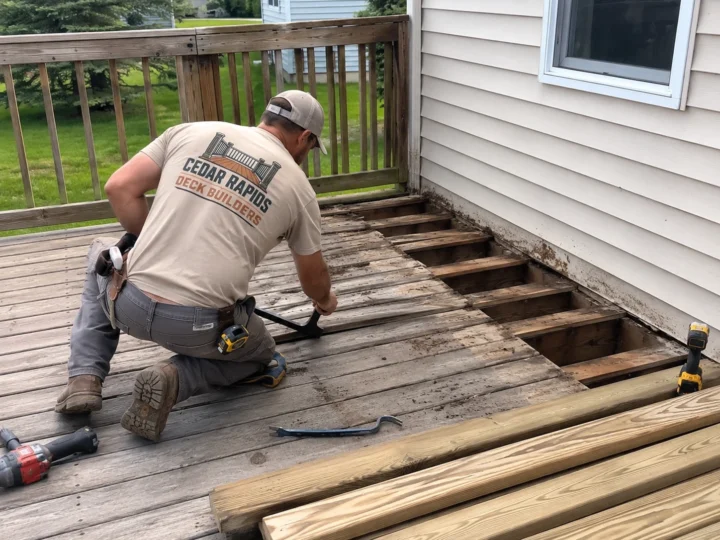
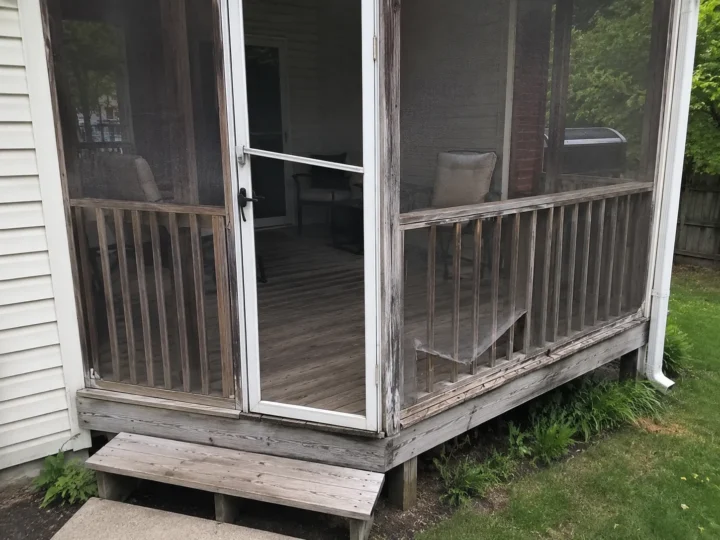
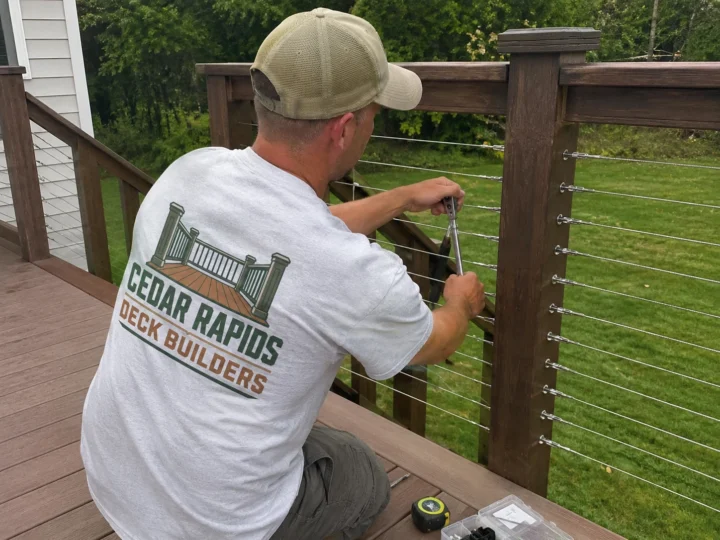
The Center Point photos on this page show rotted-board replacement, a screened-porch exterior before repair, and cable-railing installation.
Fresh boards and railings are valuable only when the structure and access supporting them are ready for more years of service.
Address movement, damaged framing, weak posts, and connection problems that affect the whole deck.
Prioritize stairs, landings, railings, and the route people use every day.
Compare the cost of repair with how much dependable service the existing deck can still provide.
A soft board, wobbly railing, or unstable stair can be the only problem—or a sign that nearby framing and connections also need attention. Looking beyond the surface helps prevent a small repair from becoming a temporary cosmetic patch.
When several parts of the deck are worn, moving, or no longer useful, replacement may create a safer and more satisfying result than stacking one repair onto another.
Start with the problems you can see. These services cover everything from a focused repair to complete deck replacement.
Fix soft boards, loose railings, unstable stairs, movement, rot, and other problems that make your deck harder to trust or enjoy.
See deck repair optionsAddress damaged framing, weak supports, movement, and connection problems below the surface of the deck.
See structural deck repairReplace an aging or poorly laid-out deck with a safer structure designed around how you want to use the space now.
See deck replacementReplace loose, weathered, or outdated railings with a safer system that improves the finished look of your deck.
See railing replacementSend the Center Point project address, several clear photos, and a short description of what you want to build, repair, replace, or improve. Include any material preferences or features you already have in mind.
Repair may be the better value when the problems are limited and the surrounding structure remains dependable. Replacement becomes more practical when damage, movement, unsafe access, or a poor layout affects several parts of the deck.
Sometimes. Individual replacement can work when damage is limited and the nearby framing, fasteners, and water paths remain dependable. Wider deterioration may require more extensive repair or replacement.
Possibly. The posts, framing, spacing, connections, stair transitions, and tension requirements must support the selected railing system.
If the property is outside Center Point, choose a nearby community or view the complete service-area list.
Send wide photos, close-ups of the damage, and views of the supports, stairs, and railings. Tell us what feels unsafe or no longer works.