Stop and restrict access
A sudden change, visible separation, leaning support, partial collapse, or unstable stair or guard suggests immediate risk.

Movement, decay, pulling connections, failing stairs or guards, damaged posts or beams, and ledger problems deserve prompt attention. A homeowner checklist can identify warning signs, but it cannot certify that a deck is safe.
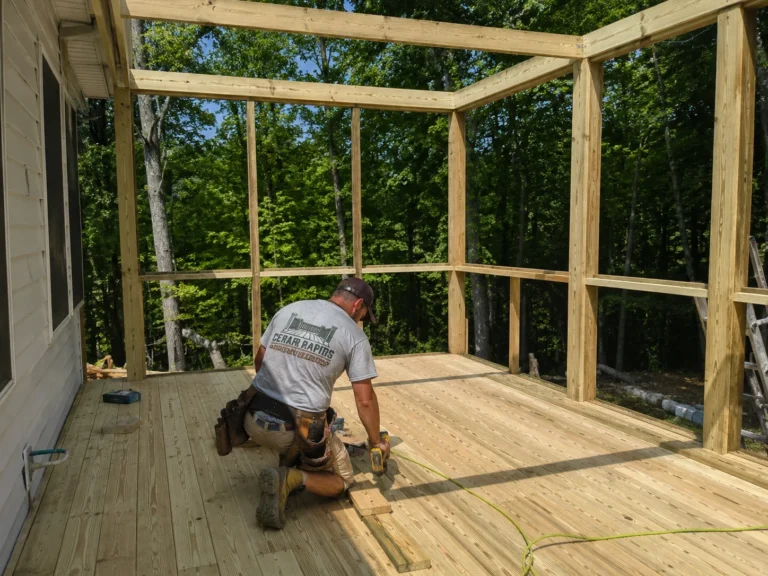
No online checklist can declare a deck safe. It can, however, help a homeowner recognize conditions that justify limiting use and arranging an on-site evaluation—especially movement, separation, decay, damaged supports, ledger problems, or unstable stairs and guards.
A sudden change, visible separation, leaning support, partial collapse, or unstable stair or guard suggests immediate risk.
Recurring movement, soft wood, corrosion, persistent leaking, or widening cracks may indicate an active problem.
Minor surface wear without movement may still deserve documentation, cleaning, and routine inspection.
Noticeable sway, bouncing, leaning posts, separating stairs, loose guards, or movement at the house connection should not be dismissed. Limit use when a condition appears unstable and arrange an on-site evaluation.
Check where wood meets soil or concrete, around fasteners, beneath planters, near the ledger, at beam and post connections, stair stringers, and places that stay wet. Softness, crushing, splits, rust stains, and missing connectors can signal deeper problems.
When movement, decay, damaged supports, or uncertain connections are present, a safety inspection can define what needs closer evaluation before repair decisions are made. Learn more about deck safety inspection
A deck surface can feel solid while rails or stairs are unsafe. Look for loose posts, open connections, damaged treads, uneven risers, missing graspable handrails where required, and movement at landings.
Paint, trim, decking, ceilings, and landscaping can conceal critical components. Online advice cannot verify spans, footing depth, fasteners, code compliance, or hidden decay. When safety is uncertain, avoid loading the deck and seek qualified local evaluation.
These services are the closest match for the conditions and decisions covered in this guide.
Photos and checklists can help organize questions, but they cannot confirm concealed conditions, dimensions, fasteners, footing depth, structural capacity, or local requirements. If safety, load capacity, or the correct scope is uncertain, limit use as appropriate and have the property evaluated in person.
Arrange an on-site review of visible safety and structural concerns.